
Free Weights Flooring
Free weight areas are the foundation of any serious strength training facility. From dumbbells and barbells to squat racks and deadlift platforms, these zones experience constant impact, heavy loads, and intense usage. Choosing the right flooring for free weights is critical to ensure safety, durability, and long-term performance.
Unlike general workout spaces, free weight zones require flooring that can withstand repeated drops, absorb shock effectively, and maintain stability under extreme pressure. High-performance rubber flooring is the preferred solution for these demanding environments.
Why Specialized Flooring is Essential for Free Weight Areas
Free weights generate significant force during lifts and drops. Without proper flooring:
- Subfloors can crack or weaken over time
- Equipment may sustain unnecessary damage
- Noise and vibration levels increase
- Athlete safety may be compromised
- Repeated impact stress
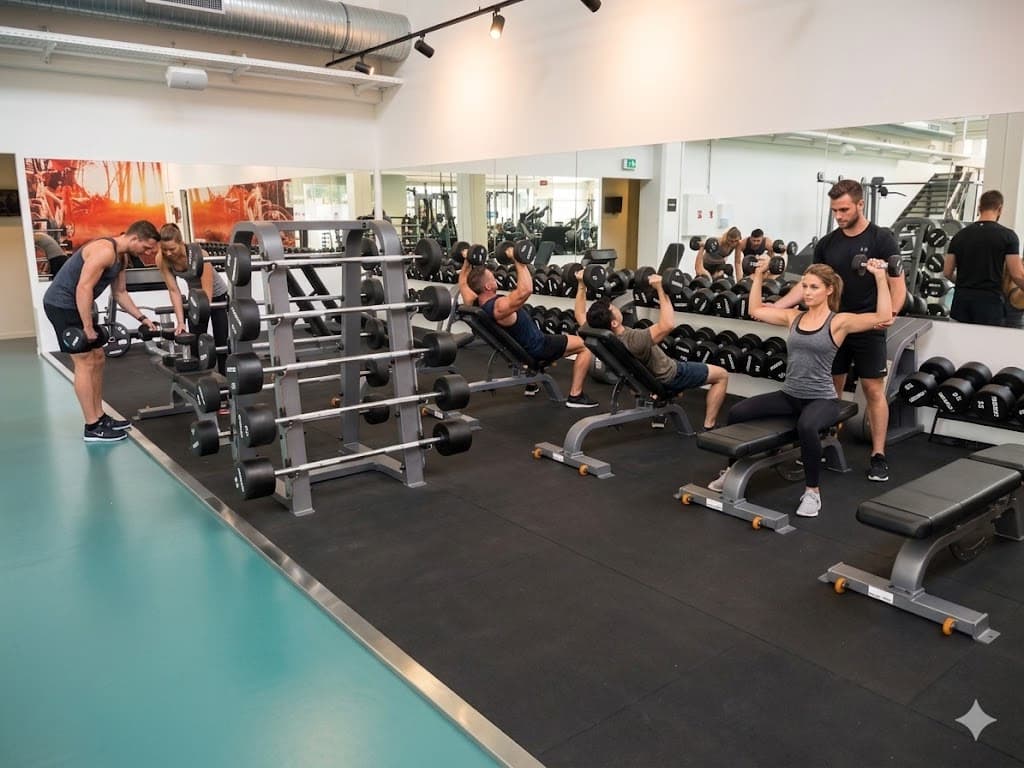
Heavy-duty rubber flooring provides a protective barrier that absorbs impact while maintaining a firm, stable lifting surface.
Key Performance Requirements for Free Weight Flooring

Impact Absorption
Reduces shock from dropped weights and protects both the subfloor and equipment.

Load-Bearing Strength
Supports heavy racks, benches, & plate-loaded machines without compression or surface deformation.

Stability and Firmness
Ensures lifters have a solid base during squats, deadlifts, and Olympic lifts.

Noise & Vibration Reduction
Minimizes sound transfer, especially important in multi-level buildings.

Slip Resistance
Provides consistent grip, even during high-intensity or explosive movements.
Recommended Thickness for Free Weight Areas
Choosing the correct thickness depends on the training intensity:

Light free weight zones
10mm - 15mm
Commercial strength areas
15mm - 20mm
Heavy lifting & powerlifting zones
20mm - 43mmBuilt for Long-Term Durability
Premium rubber flooring for free weight areas is engineered to:
Resist cracking and surface wear
Maintain shape under heavy static loads
Withstand repeated high-impact drops
Deliver long service life with minimal maintenance
This ensures your strength zone remains safe, professional, and high-performing for years.
Frequently Asked Questions (FAQs)
Heavy-duty rubber gym flooring is the best option for free weight zones because it absorbs impact, protects the subfloor, and provides the stability needed for safe lifting. Rubber flooring is also widely recommended for weightlifting areas due to its durability and shock absorption
For light free weight areas, 10mm–15mm can be enough, but for commercial strength zones and heavy lifting areas, 15mm–43mm rubber flooring is recommended. Thicker flooring gives better shock absorption and protection from dropped weights.
Yes. High-quality rubber flooring is designed to absorb shock from dropped dumbbells and barbells, helping prevent damage to both the floor and the equipment.
Yes. Rubber flooring significantly reduces vibration and impact noise, which makes it a good choice for gyms in residential buildings, hotels, and multi-level facilities.
Absolutely. Rubber flooring provides a stable, slip-resistant surface that supports safe performance during squats, deadlifts, and Olympic lifts.
With proper installation and maintenance, heavy-duty rubber flooring can last 8–15 years or more, even in high-traffic commercial gym environments.
Yes. If you choose modular gym flooring tiles, individual tiles can be replaced without removing the entire floor, which makes maintenance more cost-effective.
Yes. Rubber flooring is an excellent option for home gyms because it protects residential subfloors, reduces noise, and delivers professional-grade performance.